NATALIE BOGDANOFF'S E-PORTFOLIO

Standard 3:
Equity, Inclusiveness & Cultural Responsiveness
Effective educational leaders strive for equity of educational opportunity and culturally responsive practices to promote each student’s academic success and well-being.
Guiding Question 1:
How do effective leaders ensure that each student is treated fairly, respectfully, and with an
understanding of each student’s culture and context?
Guiding Question 2:
How do effective leaders ensure that each student has equitable access to effective teachers,
learning opportunities, academic and social support, and other resources necessary for success?
Guiding Question 3:
How do effective leaders develop student policies and address student misconduct in a positive,
fair, and unbiased manner?
Guiding Question 4:
How do effective leaders promote the preparation of students to live productively and contribute
to the diverse cultural contexts of a global society?

Evidence- Inclusion policy of SIS

Evidence- Internal Assessment Professional Development training to promote fair moderation

Evidence- Extended Essay Professional Development training to promote fair moderation

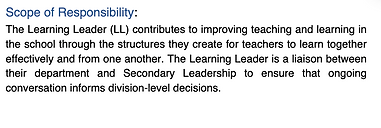
Evidence- Job description for Year 1 Grade Level Leader


Evidence: Behavior intervention and pastoral care for attendance and tardiness to SEL mentor time. Email to students and parents: Please note that this semester xxx has been late to school 5 times. In Semester 2 we are using a different approach to addressing instances of students being late-to-school, with us going through a 7-step process of supporting the student to alter their behaviour and routines. These steps are: 1st & 2nd: Mentor-led conversations with the student about them being late to school, along with the development of a plan that ensures their consistent arrival at school before 8:20am. 3rd: Grade Level Leader conversation with student about them being late to school 3 times, and a review of the plan made with the Mentor teacher. 4th: A Grade Level Leader conversation followed by a Managebac Behaviour Note formally requesting the student to adjust their behavior, with a written outline of why this is an important thing for them to do. 5th & 6th: The student will attend a lunch break session with the Grade Level Leader. We will discuss again their being late to school, and what can be done to support them in getting to school on time. Following this the student will do independent study. 7th: Following the seventh instance of the student being late to school, the Assistant Principal will invite a parent of the student to school for a meeting to discuss how the school and family can work in partnership to support the student getting to school on time. We hope that through some or all of these steps we can instill productive habits in xxx that will ensure attendance and participation in our Mentor Program. It's an important part of the students' time at SIS, aiding in their holistic development and connection to the community. It would be appreciated if you could continue your encouragement and support of xxx in attending school on time. If there is anything the school should know about this matter, please let us know so we can work together in our support of xxx.


How do effective leaders ensure that each student is treated fairly, respectfully, and with an
understanding of each student’s culture and context?
As an effective leader, it is evident from observation and through induction and other practices of the professional learning community that Natalie requires all staff and faculty to understand and follow the documented school code of conduct that each student is valued and a high value is placed on fairness, respect, and understanding of each student’s culture and context for learning and growth. This is evidenced by Natalie:
-
Cultivating a positive school culture; At SIS, Natalie has placed high value on a positive school culture that values diversity, inclusion, and respect. Natalie promotes a safe and welcoming environment where students feel valued and accepted for who they are.
-
Promoting equitable practices; At SIS, Natalie has helped to establish EE (Extended Essay) moderation, and IA (Internal Assessment) moderation for DP year 1 & 2 students, and has participated in moderation of exams for DP Chemistry and MYP science summative assignments. Natalie helps to enforce policies and practices that promote fairness and equity in all aspects of the school community. As the Head of DP year 1 students, Natalie has assisted in ensuring that disciplinary actions and access to resources are administered without bias or discrimination.
-
Participating in professional development on the topic of DEIJ&B; Natalie has commited time for professional development and training to increase her understanding of DEIJ&B competence.
-
Engaged parents: As the CAS coordinator and DP Year 1 leader, Natalie has actively engage parents in the educational process. Natalie has recognized the importance of involving parents in decision-making, seeking their input, and keeping them informed about their child's progress.
-
Leading by example; Natalie models the behavior that she expects from others. Natalie demonstrates respect, inclusivity, and cultural understanding in her interactions with students, staff, and the wider school community.
How do effective leaders ensure that each student has equitable access to effective teachers,
learning opportunities, academic and social support, and other resources necessary for success?
Natalie regularly informally observes in every classroom of her DP Year 1 team (at least weekly) to ensure that teachers (mentors) are providing appropriate lessons that academically and socially support learning. This is evidenced by observation reports presented to each teacher in debriefing conferences. Natalie also ensures that teachers/mentors have the materials, supplies, and technology necessary to plan and deliver outstanding lessons.This is evidenced by Natalie:
-
Through the creation and implementation of the SEL mentor program for the DP Year 1 students. This cohort has 51 students in total and has been divided among 6 teacher-mentors. Through this program teachers prioritize the provision of academic and social support systems for students. Natalie has established robust support structures such as academic tutoring time, Social-emotional mentoring initiatives, counseling services, university application help and advice, and targeted interventions for students who require additional behavioral assistance. These support systems help address learning gaps, promote social-emotional well-being, and provide equitable access to resources for student success.
-
Collaboration and partnerships; As the EARCOS (East Asia Regional Council of Schools) Teacher Representative, Natalie has collaborated with EARCOS to help students apply for university scholarships, coworkers apply for special grant funding, and organized travel for professional development conferences.
-
Data-Informed decision making; At SIS Natalie has implemented the use of attendance data to correlate students of academic and behavioral support. Together with the other high school grade level leaders, she has helped to create a study-session program that is one-on-one with students who are excessively tardy to school and miss the morning SEL-mentor time. Natalie has collected data and used it to identify students of need. Natalie collects and analyze data on student performance, attendance, discipline, and other relevant factors to identify gaps in access and achievement. This data helps to identify areas of improvement, implement targeted interventions, and monitor progress towards equitable outcomes.
How do effective leaders develop student policies and address student misconduct in a positive, fair, and unbiased manner?
As an effective leader, Natalie is instrumental in developing a School Wide System of Support for behavior interventions. All stakeholders are involved in the process. The code of conduct is reviewed by the Leadership team to ensure that it is positive, fair, and unbiased. Professional development is implemented that thoroughly explains the Behavior System and models what it will look like. Documentation is presented to show the effects of the system. This is evidenced by Natalie:
-
Creating clear and transparent Policies; The policies are shared out to students and parents in discussion posts and during Parent, Teacher, Student conferences. Natalie's behavior policies develop expectations, standards of behavior, and consequences for misconduct. These policies are easily accessible to students, parents, and staff. By ensuring transparency, Natalie has promoted a shared understanding of the rules and expectations, reducing the likelihood of misunderstandings or bias.
-
Establishing restorative practices as an alternative approach to student misconduct; At SIS Natalie focuses on repairing harm, fostering accountability, and promoting a sense of community. Instead of solely relying on punitive measures, restorative practices encourage dialogue, empathy, and understanding between the offender, the victim, and the affected community. This approach helps students learn from their mistakes, make amends, and build positive relationships.
-
Implementing proactive prevention strategies; At SIS, Natalie minimizes instances of misconduct by implementing a mentor program that promotes positive behavior, social-emotional learning, and conflict resolution skills. Natalie has also fostered a positive school climate and culture that values respect, empathy, and inclusivity. By addressing the underlying factors that contribute to misconduct, the occurrence of disciplinary issues are reduced and a supportive environment for all students is created.
How do effective leaders promote the preparation of students to live productively and contribute to the diverse cultural contexts of a global society?
As an effective leader, Natalie actively promotes the use of technology for students to connect with peers in other global cultures in an attempt to promote understanding of a global society. Understanding of different cultures is a part of the regular curriculum and the leader participates in special activities that promote understanding and cooperation between and among cultures. This is evidenced by Natalie:
-
Promoting and providing Intercultural education; Natalie lead a team to Vietnam to study another culture for a "week without walls program." During this excursion students prioritized global and intercultural education as an integral part of the school curriculum. Natalie ensured that students had the opportunity to learn about a different culture, language, and perspective. This includes incorporating global issues, multicultural literature, and international experiences into the curriculum. During the educational trip abroad to Vietnam, students volunteered at a special needs facility for children that are orphans. By engaging with the orphanage community, the students developed a sense of responsibility and an understanding of other points of view.
-
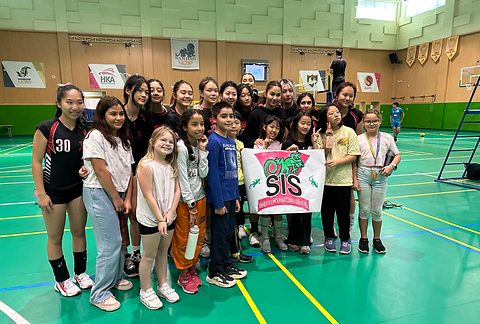
Traveling with students for athletic and academic competitions; Natalie chapperoned and coached the varsity girls volleyball team as they traveled to Nanjing, China. There they learned about the old capital and history of China. Natalie also mentored and traveled with students to compete in the Regeneron Science Fair in Chengdu, China. Here students learned about science and design from students with diverse backgrounds and learned about panda history.
-
Promoting language acquisition in the classroom; at SIS, Natalie recognizes the importance of language acquisition in preparing students for a global society. Natalie promotes the learning of multiple languages in the classroom ( English, French, Korean, and Chinese) and as independent learning experiences as a part of the CAS program. By fostering language learning opportunities, Natalie has helped students acquire the skills to communicate and interact effectively across cultural boundaries.