NATALIE BOGDANOFF'S E-PORTFOLIO

Standard 4:
Curriculum, Instruction & Assessment
Effective educational leaders develop and support intellectually rigorous and coherent systems of curriculum, instruction, and assessment to promote each student’s academic success and well-being.
Guiding Question 1:
How do effective leaders implement coherent systems of curriculum, instruction, and assessment that promote the mission, vision, and core values of the school, embody high expectations for student learning, align with academic standards, and are culturally responsive?
Guiding Question 2:
How do effective leaders promote instructional practice that is consistent with knowledge of child learning and development, effective pedagogy, and the needs of each student?
Guiding Question 3:
How do effective leaders promote the effective use of technology in the service of teaching and
learning?
Guiding Question 4:
How do effective leaders select and plan for school-wide assessments to evaluate student learning, development, and academic performance?
Guiding Question 5:
How do effective leaders use assessment data appropriately and within technical limitations to
monitor student progress and improve instruction?




How do effective leaders implement coherent systems of curriculum, instruction, and assessment that promote the mission, vision, and core values of the school, embody high expectations for student learning, align with academic standards, and are culturally responsive?
As an effective leader, Natalie ensures that all curricular decisions, instruction and assessment align with the priorities and strategies of the SIS school improvement plan and the mission, philosophy and beliefs for the school. Natalie facilitates the coherent systems of the curriculum in the following ways:
-
Clear Alignment: Natalie participates in biweekly meetings to help ensure that the curriculum, instruction, and assessment practices are aligned with the school's mission, philosophy, and beliefs. The SIS science department has written a guide that connects the IB DP & MYP principles into practices within the SIS science curriculum.
-
Standards-Based Approach: Natalie evaluates student knowledge and understanding not based on percentile correct/incorrect, but by a statement markband that ensures that the curriculum is aligned with academic standards and learning objectives. Markbands are a comprehensive statement of expected performance against which responses are judged. They represent a single holistic criterion divided into level descriptors. Each level descriptor corresponds to a range of marks to differentiate student performance. A best-fit approach is used to ascertain which particular mark to use from the possible range for each level descriptor.
-
Collaboration: Natalie fosters a collaborative culture where teachers, administrators, and other stakeholders have a voice in shaping the curriculum, instruction, and assessment practices. She participates in regular meetings focusing on grade levels, subjects, language support, behavior support, professional learning communities, and collaborative planning sessions to ensure shared ownership and collective decision making.
-
Ongoing Assessment and Feedback: Natalie has established a system of ongoing assessment and feedback that informs instruction and supports student growth. Natalie encourages teachers to use a variety of formative and summative assessment measures to gauge student progress and adjust instructional strategies accordingly. Continuous feedback and reflection promotes continuous improvement.
How do effective leaders promote instructional practice that is consistent with knowledge of child learning and development, effective pedagogy, and the needs of each student?
Natalie visits classrooms on a daily basis taking note of the lesson being taught and its effectiveness. She provides comprehensive feedback on student-centered learning practices, equity and inclusion, and/or improving instructional practices to the teacher in the form of a brief conversation later, an informal note, or in specific instances a formal evaluation. Natalie discusses the needs of specific students with the teacher to ensure that individuals have access to the core curriculum at the appropriate level. Natalie promotes the instructional practice of SEL/mentor time the following ways:
-
Individualized Support: Natalie recognizes that each student has unique needs and learning styles. She encourages mentors to differentiate instruction to accommodate diverse learners and provide individualized support when necessary.
-
Collaboration and Reflection: Natalie fosters a culture of collaboration and reflection among mentors. She creates opportunities for mentors to share ideas and insights with the group, discuss student progress, and exchange effective instructional strategies.
-
Observation and Feedback: Natalie rotates classroom observations of mentor time and provides constructive feedback to mentors. She uses these observations as opportunities to identify areas of strength and areas for improvement in instructional practice. Feedback is specific, actionable, and focused on supporting mentors' professional growth.
How do effective leaders promote the effective use of technology in the service of teaching and learning?
Natalie conducts a technology audit of the current technology infrastructure and resources and invites faculty and support staff to participate in a needs analysis of new equipment as well as professional development and technology support required for faculty to equip and enable them in creating technology driven, 21st Century learning opportunities for their students. Natalie supports technology infrastructure and resources in the following ways:
-
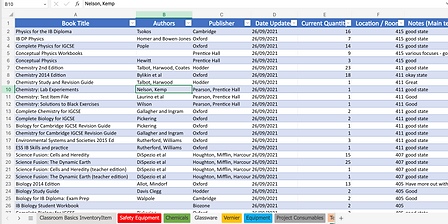
Technology Integration Specialists: The science department has a shared responsibility to become a technology specialist and share their knowledge with the rest of the staff. The science teachers have completed a technology audit and demonstrated how technology can be used in the classroom making it accessible to others. Thus assisting teachers in integrating technology effectively into their lesson plans, offer troubleshooting assistance, and share best practices for technology-enhanced instruction.
-
Collaborative Learning Communities: Natalie fosters collaborative learning communities where teachers can share ideas, strategies, and experiences. Natalie has collaborated in creating a professional learning online community with helpful conversations in DP Chemistry, DP ESS, CAS, and Service as Action. Here the teachers collaborate, learn from one another, and exchange innovative approaches to technology-enhanced teaching and learning.
-
Evaluation and Continuous Improvement: Natalie regularly evaluates the effectiveness of technology integration efforts. As a science department, feedback is gathered and analyzed from teachers and students about the use of technology and adjustments are made as needed.
How do effective leaders select and plan for school-wide assessments to evaluate student learning, development, and academic performance?
Natalie attends all required trainings on the implementation of the standardized testing systems (MAP, WIDA, DP exams) that has been adopted by the School Board. Natalie works with teachers to ensure that they understand the testing requirements. A testing schedule is developed to minimize interruptions in the classrooms where testing is occurring. The check-in/check-out system is clear to all teachers. Confidentiality agreements are signed and kept in the school office. Every person who has any contact with the test materials (except students) is required to sign an agreement. The principal either acts as the testing coordinator or appoints a testing coordinator to insure that all regulations are strictly followed. Natalie shows evidence of this by:
-
Planing Assessment Schedules: Natalie can develop an assessment schedule that ensures a balanced and manageable workload for students and teachers. She considers factors such as the frequency of assessments, the timing of major assessments in relation to instructional units, and the need for interim assessments to monitor progress. Leaders also allocate sufficient time for teachers to provide meaningful feedback to students based on the assessment results
The image on the left shows: the student monthly calendar is reviewed to make sure that no student has more than 2 summative (red) assessments on one day, yellow represents formative and should be relatively consistent, and green is homework due dates. By viewing the calendar, teachers can prevent students from becoming overwhelmed by school work and assessments. On the right is a more specific calendar that is followed during exam weeks. Exams are evenly spread out by time and location so that the testing site is not over-crowded. Teachers are assigned based on their availability, and an on-call teacher is assigned, as well as a lead teacher is assigned. Teachers are not allowed to invigilate (supervise) their own exams.


How do effective leaders use assessment data appropriately and within technical limitations to monitor student progress and improve instruction?
Natalie is able to successfully support evaluation teams among the faculty who collate and interpret student assessment data and then facilitates collaborative brainstorming sessions with the whole faculty to build a strategy for improvements in instructional practices and to ensure that the learning needs of all students, including students with special needs, are being appropriately addressed. Natalie helps to facilitate the evaluation teams by:
-
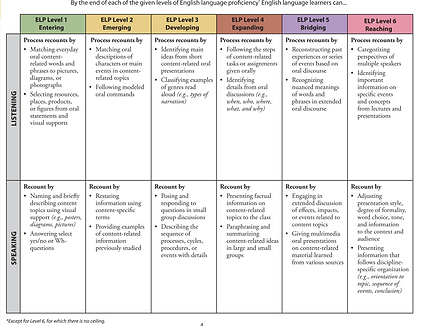
Communicating Assessment Results: Natalie ensures that assessment results are communicated effectively to students, parents, co-teachers, and among the DP year 1 teachers and science department. Natalie helps to develop strategies and share individual student results with parents, students themselves, and teachers. One way this is demonstrated is with the WIDA "can-do" statements. Instead of discussing what students have difficulty with, Natalie facilitates discussion with teachers about what students of differing English abilities can do.
-
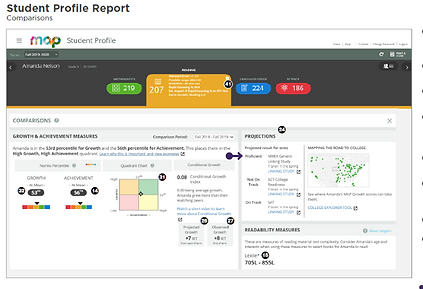
Data Analysis and Interpretation: Natalie has the ability to analyze assessment data to gain insights into student performance and progress. One example is with MAP data, the student profile is maintained from year to year and measures the student's growth in subject knowledge. By analyzing MAP data teachers can develop techniques to identify patterns, trends, and areas of strength and weakness in the students.
-
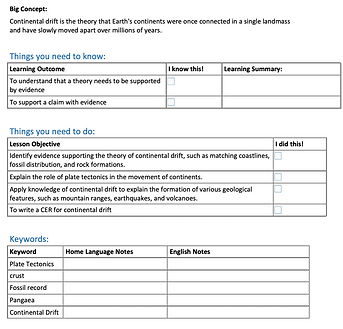
Differentiated Instruction: Using assessment data, Natalie support teachers in implementing differentiated instruction. This is seen in Grade 6 science differentiated lexile reading texts, assessments based on CER writing, project based learning, lab reports, experiments, etc... The data helps identify students' varying levels of readiness, learning styles, and interests.
-
Collaboration and PLCs: Natalie fosters collaboration among teachers through professional learning communities (PLCs). Every Wednesday the faculty meets to analyze assessment data collectively, share best practices, and collaborate on instructional improvement strategies.
Natalie has identified 3 goals to successfully implement data to improve student achievement. It is Natalie's goal to use data to guide decision making with ethical considerations as well as a logistical approach to improve student achievement.
Natalie has identified strengths and weakness of standardized tests. One way to facilitate discussions about the standardized tests is to have clear and open communication about the next steps when it comes to students. This requires clear communication with parents. This communication is translated from English into Mandarin Chinese, and Korean to facilitate open communication.