NATALIE BOGDANOFF'S E-PORTFOLIO

Standard 2:
Ethics & Professional Norms
Guiding Question 1:
How do effective leaders act ethically and professionally in personal conduct, relationships with others, decision-making, stewardship of the school’s resources, and all aspects of school leadership?
Guiding Question 2:
How do effective leaders place children at the center of education and accept responsibility for each student’s academic success and well-being?
Guiding Question 3:
How do effective leaders provide moral direction for the school and promote ethical and professional behavior among faculty and staff?
Guiding Question 4:
How do effective leaders demonstrate ethical responsibility towards issues related to special education and social justice?




How do effective leaders act ethically and professionally in personal conduct, relationships with others, decision-making, stewardship of the school’s resources, and all aspects of school leadership?
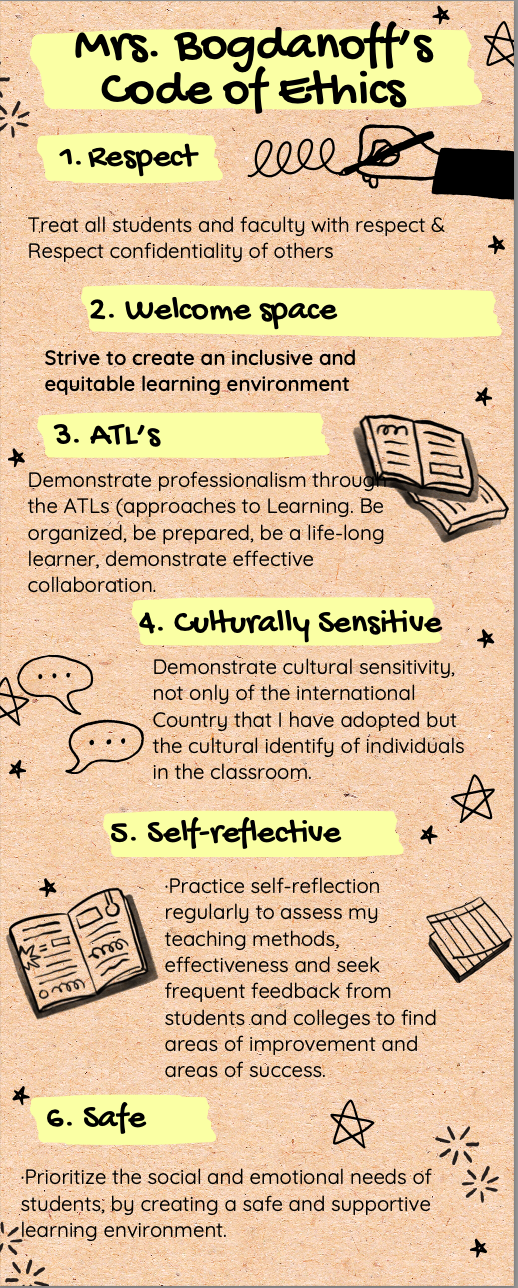
Natalie involves stakeholders in developing budget priorities, and decision-making. Maintains working relationships between and among the groups. Acts ethically and professionally as evidenced by survey results of the students, staff, parents, and community members. Natalie acts ethically and professionally in various aspects of school leadership by demonstrating integrity, respect, transparency, and responsible decision-making. This is evidenced in her personal code of ethics:
-
Treat all students and faculty with respect & respect the confidentiality of others
-
Strive to create an inclusive and equitable learning environment
-
Demonstrate professionalism through the ATLs. Be organized, be prepared, be a life-long learner, and demonstrate effective collaboration.
-
Demonstrate cultural sensitivity, not only if the international country that she has adopted but the cultural identity of individuals in the classroom.
-
Practice self-reflection regularly to asses teaching methods, and effectiveness and seek frequent feedback from students and colleagues to find areas of improvement and areas of success.
-
Prioritize the social and emotional needs of students by creating a safe and supportive learning environment.
How do effective leaders place children at the center of education and accept responsibility for each student’s academic success and well-being?
Natalie demonstrates effective leadership by placing children at the center of education by embracing a student-centric approach that prioritizes their needs and well-being. This is evidenced by the feedback surveys that Natalie conducts during semester 1 of all her classes.
-
Natalie accepts responsibility for each student's academic success and overall development by making decisions based on the fundamental question, "What is best for kids?" She listens to student feedback and responds accordingly to make school an enjoyable place for learning and growing.
-
It is Natalie’s priority that she use data-driven evidence to make positive changes in the classroom environment. Natalie is familiar with each student's academic progress evidenced by her use of MAP data, IB-DP predicted scores, mock exams, and participation in professional development and professional learning communities.
-
Natalie incorporates student well-being in her daily plans as reflected in the priorities outlined in the school improvement plan, and actively engages in the professional learning community of DEIJ&B (diversity, equity, inclusion, justice, and belonging).
-
In her classroom, Natalie fosters a culture of student-centered learning, where individual needs, interests, and abilities are valued and nurtured. By creating an environment that empowers students and supports their holistic growth, she ensures that every child receives the attention and resources they need to thrive academically, emotionally, and socially.
-
Natalie is the department head for the DP Year 1 students and has created an extensive calendar for SEL (Social, emotional, learning) support and education for students as they transition through high school and prepare for university.
How do effective leaders provide moral direction for the school and promote ethical and professional behavior among faculty and staff?
Natalie models as well as promotes ethical and professional behavior among and between faculty and staff including fair and respectful treatment of all students and encourages the same type of behavior between faculty, staff, and students as evidenced by observation and practice of the Ethical and Professional Code of Conduct. This is evidenced by Natalie:
-
Setting clear expectations by collaborating with students to create classroom agreements, and revisiting the classroom agreements periodically throughout the school year.
-
Natalie models ethical behavior and leads by example, she has signed the SIS code of ethics and agrees to behave accordingly with students and colleagues.
-
Natalie has attended numerous professional development training workshops to continue promoting SIS’s ethics and professional standards.
-
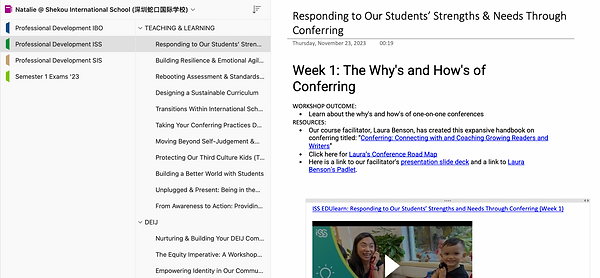
Natalie provides regular communication and reflection during and after the training opportunities to reinforce these principles to help coworkers understand their ethical responsibilities at SIS as seen in her SIS Microsoft OneNote notebook
How do effective leaders demonstrate ethical responsibility towards issues related to special education and social justice?
Natalie reflects on the ethical challenges of making provisions for students with special needs and any other issues related to social justice and human rights as witnessed, experienced, or heard by the leader. Natalie understands the need to address and resolve these issues through dialogue and support when they come up in the school environment in a positive manner that ensures the well-being of all students and staff. This is evidenced by Natalie:
-
Participating in DEIJ&B discussions, professional development, and training. For example equity and inclusion. Natalie has prioritized equity and inclusion in her approach to specialized education of a diverse community of students. This is seen as her role of EARCOS teacher representative and support of colleagues presenting a workshop titled: Building Equitable Classrooms; Confronting Power, Privilege, and Bias in the Curriculum.
-
Natalie regularly evaluates the effectiveness of ethics and social justice as the DP Year 1 learning lead. Weekly the team meets to discuss the curriculum and establish procedures that promote equity in the classroom and support the inclusion of all students with diverse needs.